

Divine Dining: How India’s Temple Foods Feed the Soul
Divine Dining: How India’s Temple Foods Feed the Soul
Ameeta Menon
Co-Founder, Chiranjeev Gurukul | Pune
In India, food is not merely sustenance; it is a sacred bridge between the human and the divine. Known as Prasadam or Bhog, temple food is a culinary tradition rooted in Sattvik principles, prepared strictly without onion, garlic, or artificial additives to preserve spiritual purity.
What makes these sacred kitchens truly miraculous is how they blend ancient lore, unique engineering, and immense scale to feed millions of devotees every day.
The Mahabharata Miracle of Udupi: The legendary culinary reputation of Karnataka’s Udupi Sri Krishna Matha traces back to the epic Kurukshetra war. The neutral King of Udupi volunteered to cook for both armies. To avoid any food waste amidst daily casualties, the king devised a genius method: he served Lord Krishna a bowl of peanuts every night. By counting the remaining peanuts, he knew exactly how many thousands of soldiers would perish the next day. Blessed by Krishna for this zero-waste service, the region inherited an unmatched culinary legacy that still drives its daily temple feasts today.
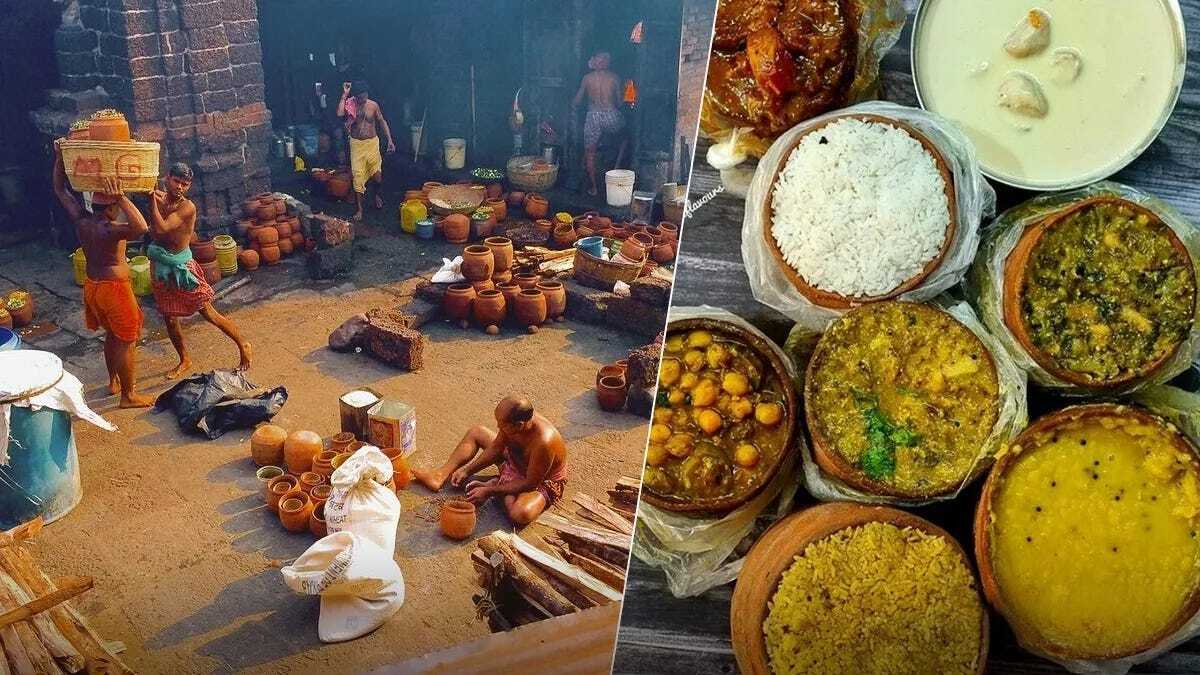
Image Source: Dharmik Vibes
The Stacking Pots of Puri: At the Jagannath Temple in Odisha, the Mahaprasad consists of 56 distinct items cooked entirely in earthen pots. In a fascinating feat of traditional engineering, seven pots are stacked vertically over a single wood fire. Remarkably, the food in the topmost pot always cooks first.
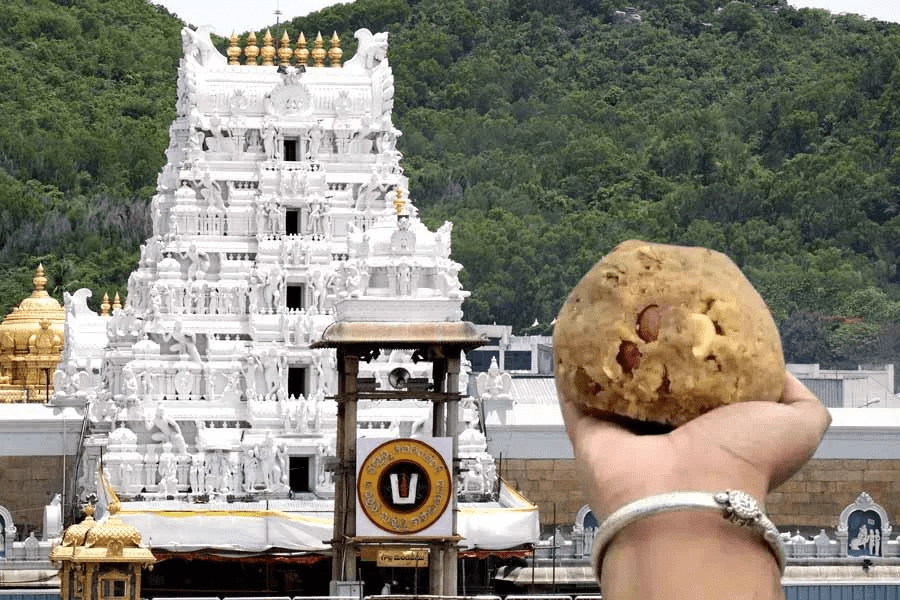
Image source: Tirupati Helps
The Mega-Kitchen of Tirupati: High in the hills of Andhra Pradesh, the Tirumala Venkateswara Temple produces the world-famous Tirupati Laddu. Infused with pure ghee, saffron, and cardamom and camphor, this dense, aromatic sweet has even been granted a Geographical Indication (GI) tag to protect its unique heritage.
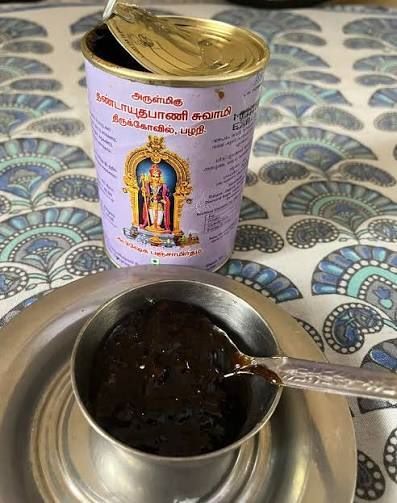
Image source: Facebook
The Sacred Jam of Palani: At the Arulmigu Dhandayuthapani Swamy Temple in Tamil Nadu, devotees receive Palani Panchamritham. This unique, preservation-free, jam-like offering is crafted from five natural ingredients: bananas, jaggery, cow ghee, honey, and cardamom and lasts for months without refrigeration or chemical preservatives.
From the rich Palpayasam at Kerala’s Guruvayur Temple to the tangy Puliyodarai (tamarind rice) of Srirangam’s Sri Ranganathaswamy Temple, these sacred spaces prove that when food is cooked with absolute devotion, it transforms into a culinary art form that transcends time.
